Mushroom picking: this is how you should do it

Are you passionate about mushrooms but have never tried picking them with your own hands?

You may not know it, but fresh mushrooms add much more flavor to your recipes than those bought at a supermarket, not to mention the satisfaction you'll get from having picked them yourself.

For all those who want to get into the world of mycology and learn about mushroom picking, today we'll show you how to do it correctly and what materials you should always carry in your kit.

What do we need to collect mushrooms?

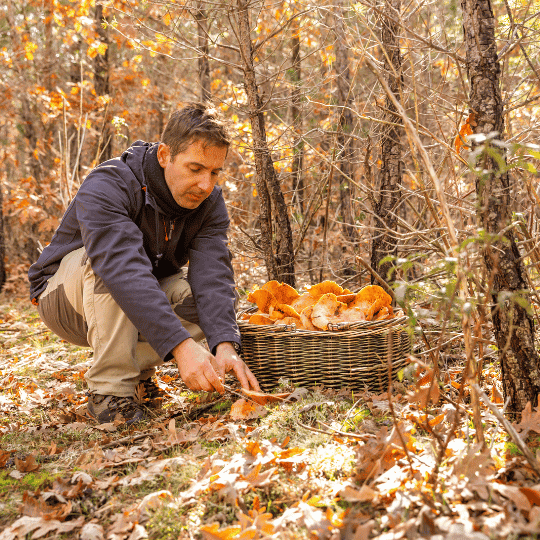
Wicker Basket (or similar)

We imagine you've heard this many times, but plastic bags or similar items CANNOT be used to collect mushrooms.

A wicker basket is essential for proper mushroom harvesting, as it allows spores to be released so the mushrooms can continue to reproduce.

Additionally, the basket allows the mushrooms to breathe, helping to prevent excessive moisture that can cause them to decay.

Field Knife or Pocket Knife

A sharp knife or pocket knife is essential for cutting mushrooms cleanly and in a way that is respectful of the environment. When cutting mushrooms, it's important not to pull them off, as this can damage the mycelium (the underground part of the mushroom), which could affect future mushroom growth in that area.

The knife should be smooth and very sharp to cut mushrooms well.

Mushroom Guide

Having a mushroom guide, preferably one specific to the area where you plan to collect, is an essential tool for identifying edible and poisonous species.

Make sure the guide includes clear photos and detailed descriptions of each species' characteristics. Most importantly, if you're not entirely sure what type of mushroom you're looking at, DO NOT collect it, or you risk poisoning yourself.

Gloves

Although not essential, wearing gloves can be helpful to protect your hands from possible irritation that some mushroom species can cause.

You can add other materials, such as a magnifying glass to observe the mushrooms more closely or a tape measure to check their sizes, but with these materials, you have your basic kit ready to venture into mushroom collecting for the first time.

pick mushrooms

What should you know?

Know Your Local Laws

Before you go mushroom picking, make sure it's legal in your area.

In some areas, mushroom picking is regulated, and there may be restrictions on the species and quantities you can collect, or you may be required to obtain a license.

Learn to Identify Edible and Poisonous Mushrooms

One of the most common mistakes among beginners is confusing edible and poisonous mushrooms.

There are some toxic species that closely resemble edible ones, so it's crucial to thoroughly understand the differences.

For example, Amanita muscaria (the fairy mushroom) is one of the best-known, but it is highly poisonous.

Some aspects to consider when identifying a mushroom include:

  • Cap color: Edible mushrooms tend to have softer colors, while poisonous mushrooms may have more intense or unusual hues.
  • Girdles or spores: Observe the arrangement of the gills and the color of the spores, as this is a good indicator for classifying the mushroom.
  • Smell: Some mushrooms have a distinctive smell that can help you identify them. However, not all mushrooms have an easily recognizable aroma, so this method is not always reliable.

NEVER pick mushrooms you're not sure you can identify

This is the most important piece of advice, and the one most often repeated by mycology experts: if you're not sure a mushroom is edible, don't pick it.

Although the desire to find something is tempting, the risks associated with picking unknown mushrooms can be deadly. If you have any doubts, it's best to leave them alone.

Responsible harvesting

Mushroom harvesting should be done in a sustainable and environmentally friendly manner.

Never pick all the mushrooms in an area, as this will prevent the species from reproducing.

Take care of your personal safety

Mushroom picking often involves walking on trails or over difficult terrain. Wear comfortable clothing appropriate for the activity, such as sturdy boots and clothing that protects you from branches and insects.

look for mushrooms

One last important note

Mushroom picking can be an extremely rewarding activity, as long as it's done with caution and knowledge.

Enjoying a plate of fresh mushrooms that you've picked yourself is infinitely more delicious.

Equipping yourself with the right tools and following safety tips will help you enjoy the experience without compromising your well-being or that of the ecosystem.

Remember that while the rewards may be delicious, caution and education are essential when it comes to mushrooms. Good luck on your next mushroom picking trip!

5€ off your first purchase!

From February 1st to November 15th