DIFFERENCES BETWEEN VIRGIN AND EXTRA VIRGIN OLIVE OIL

Within Spanish gastronomy, one of the most representative products is olive oil, which is a cornerstone of the Mediterranean diet. Its flavor, aroma, and versatility make it indispensable for any type of culinary preparation. However, not all olive oils are the same; understanding their specific qualities will help you choose the best one for any given occasion.

Although they are frequently confused, olive oil and extra virgin olive oil differ significantly in terms of quality, sensory properties, and the specific requirements that must be met for each classification.

Both are produced using physical or mechanical processes, but extra virgin olive oil must meet specific quality criteria.

What is extra virgin olive oil?

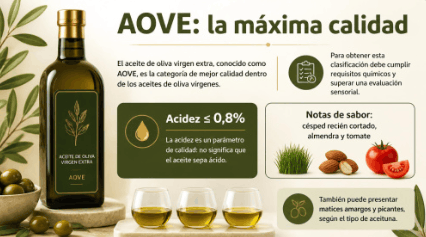
Extra virgin olive oil—often referred to by the acronym EVOO—is the highest-quality category of virgin olive oils. To earn this classification, it must meet specific chemical requirements and also pass a sensory evaluation.

Furthermore, its acidity level must not exceed 0.8%. This is a quality parameter; it does not mean that the oil tastes acidic.

In terms of flavor, it may evoke notes of freshly cut grass, almonds, or tomato, among others. It can also feature bitter or peppery nuances, which vary depending on the type of olive used.

What is extra virgin olive oil?

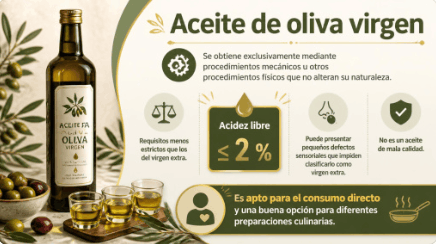
What are the characteristics of virgin olive oil?

El aceite de oliva virgen también se extrae exclusivamente a través de procedimientos mecánicos u otros físicos que no alteran lo natural. Pero también se destaca que no tiene tantos requisitos de calidad y son menos estrictos.

Su acidez no supera el 2% y puede tener pequeños defectos sensoriales que no deja clasificarlo como virgen extra.

Esto no nos dice que sea un aceite de mala calidad. Sigue siendo tan bueno como apto para el consumo directo y puede ser una muy buena opción para algunas de las distintas preparaciones culinarias.

What are the characteristics of virgin olive oil?

MAIN DIFFERENCES

While they share the same production method, there are some key differences to be aware of:

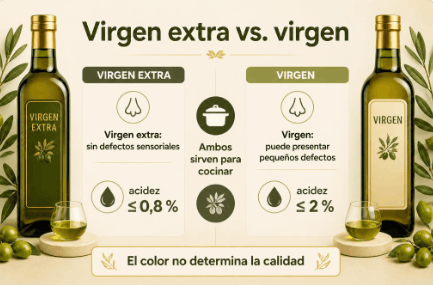
  • Sensory quality: Extra virgin olive oil has no organoleptic defects, whereas virgin olive oil may have some.
  • Acidity: The limit for virgin olive oil is 2%, while for extra virgin olive oil, it is 0.8%.
  • Aroma and flavor: Extra virgin olive oil offers a cleaner, more defined profile, though its specific nuances depend on the variety of olive used.
  • Culinary uses: Both can be used for any purpose; however, extra virgin olive oil is particularly flavorful when used raw.

* Furthermore, the color—whether greener or more golden—does not, by itself, determine quality.

MAIN DIFFERENCES

WHICH ONE IS BETTER FOR COOKING?

The choice depends on your personal preferences and the recipe. For dishes like toast, salads, or fish—or any preparation where the oil plays a starring role—extra virgin olive oil allows you to better appreciate its aromatic nuances.

For stews, sautés, and other everyday cooking, either type can be suitable. The key is to choose a high-quality product and store it properly: away from light, air, and heat.

What is the difference between extra virgin olive oil and virgin olive oil?
Extra virgin olive oil has no sensory defects and a maximum acidity level of 0.8%, whereas virgin olive oil may have minor defects and an acidity level of up to 2%.
Which oil is healthier?
Both are healthy as part of a balanced diet, but extra virgin olive oil may provide more antioxidants.
Which oil is the best?
Extra virgin olive oil is of a higher grade and stands out for its aroma and flavor.
What does the acidity of olive oil mean?
It is an indicator of quality.
How should olive oil be stored so that it does not lose its properties?
Keep it tightly sealed, in a cool, dark place, and away from heat.

5€ off your first purchase!

From February 1st to November 15th