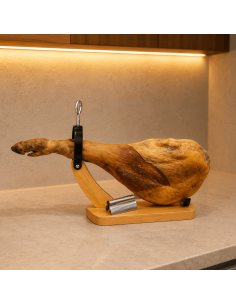
MISTAKES WHEN CUTTING HAM

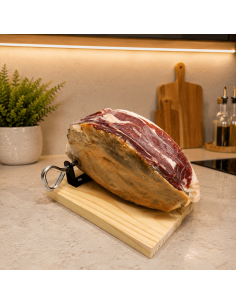
Cutting ham at home might seem easy, but to achieve a good result, we need to consider several things. How the ham is positioned, the type of cut, the pressure applied to the knife, and how the ham is stored all directly influence its flavor and texture. It's essential to have all the necessary ham accessories. First, our ham holder, a stable support that allows us to work more safely and prevents the ham from moving around while cutting.

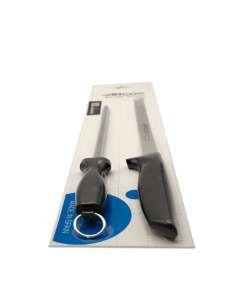
It's also super important to use the right ham knife, as not all of them allow you to get a thin, clean slice.

These tips apply to both Iberian and Serrano ham. In either case, knowing these mistakes will help you reduce waste and keep your ham in good condition.

In this article, we'll show you the most common mistakes and help you avoid them step by step so you can get the best out of your ham at home.

1.- USING THE WRONG KNIFE

One of the most common mistakes is using just any knife to cut ham, when in reality, to get a clean, thin slice, you need a knife with a long, narrow, sharp, and flexible blade.

It's also advisable to have a paring knife to remove the rind and clean areas near the bone.

Tip: If you have to apply a lot of pressure when cutting, the knife isn't sharp enough.

1.- USING THE WRONG KNIFE

2.- HAM POSITION

2.- HAM POSITION

The ham must be securely held in a stable ham holder. If the ham is not kept still, we risk an accident and an uneven cut.

Before starting, we will make sure that the ham is securely held and that we can cut it comfortably. A good position keeps the surface flat and makes cutting easier.

3.- START WITH THE WRONG PART

It's not necessary to always start cutting the ham from the same side. If you're going to eat it quickly, you can start with the shank, which is the juiciest part.

However, if you're going to eat it slowly, it's better to start with the chin, as it's narrower and dries out faster.

3.- START WITH THE WRONG PART

4. REMOVE A LOT OF FAT

The outer fat protects the ham. So, if you remove too much or even all of it at the beginning, you'll be making a mistake, because the meat will be exposed to the air and dry out faster.

The correct thing to do is to trim it as you cut it.

5.-CUT VERY THICK SLICES

A good slice of ham is thin, flexible, and very easy to eat. In fact, if the slices are too thick, the flavor is perceived differently and the texture becomes less pleasant.

The goal is to make smooth, straight, and long cuts. Do not press down or cut roughly.

6.- DO NOT MAKE A FLAT CUT

One of the most common mistakes is creating steps on the surface. This happens if we cut at the same point or irregularly.

We should keep the surface as flat as possible. This way we'll make better use of the piece and it will be easier to continue cutting.

7.- CUT THE HAM AND HAVE SOME LEFT OVER

It's best to cut just what you need, so you can enjoy all its aroma and flavor. If you cut too much, it's likely to dry out and lose its aroma.

Ideally, cut only what you're going to eat. As a guideline, for an appetizer, you can calculate between 50-80g per person.

And if you want to be more generous, between 100-150g.

8. IMPROPERLY PRESERVING HAM ONCE STARTED

Once we've started cutting the ham, we also need to take care of it.

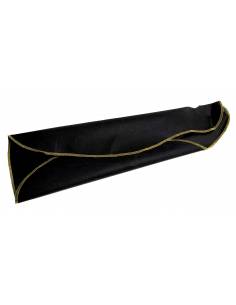
We should store it in a dry, cool place away from direct sunlight. We'll cover the cut area with clean ham fat, cling film, or a cotton cloth.

We'll also keep it away from any heat source.

9.- THROW AWAY THE BONES AND THE CUTTINGS

Not all of the ham can be sliced. However, the trimmings can be used for croquettes or stews, for example.

Like the bones, they can be used to make a good broth or even stock.

10. SERVING THE HAM TOO COLD

Ham should not be served cold. If it comes straight from the refrigerator, it will have hard fat and a less intense flavor.

It's best to serve it at room temperature. If the ham was refrigerated, take it out before eating so it can regain its texture and aroma.

10. SERVING THE HAM TOO COLD
What is the most common mistake when slicing ham?
The most common mistake is cutting slices that are too thick and uneven. This affects the texture and flavor.
Why does ham dry out after you start slicing it?
Ham dries out when it is exposed to air, direct sunlight, or heat sources. It also happens if too much protective fat is removed at the beginning.
Do you have to remove all the fat from the ham?
No. You only need to remove the outer yellow fat and the rind from the area you are going to slice. The white fat helps maintain juiciness.
How long can a cut ham last?
It depends on how it is stored and the type of ham, but ideally, it should be consumed within a few weeks to enjoy it at its best.
Is it better to slice the ham right before eating it?
Yes. Freshly sliced ​​ham retains its aroma, texture, and flavor better.

5€ off your first purchase!

From February 1st to November 15th