WHEN WAS CAVIAR DISCOVERED?

And, when was caviar discovered? Well, you know, it wasn't a discovery as such, but rather a millennia-long evolution.

The first to consume it were the ancient Persians, who did so regularly on the shores of the Caspian Sea. They used it as a medicinal supplement to gain extra energy and called it khavyar ("strength cake").

Not only that, but in Ancient Greece, Aristotle already held banquets where sturgeon roe could be found.

However, its true luxury originated in Imperial Russia. It became a delicacy thanks to the Tsars, further favored by the Orthodox Church, which permitted its consumption during periods of abstinence from meat.

Although its big leap into high society happened in the 1920s in Paris, when brothers known as the Petrossians popularized it... Currently, sturgeon caviar is the global standard of quality.

The history of this product demonstrates more than just its status. This product has evolved, improved, and risen in stature over time, thus remaining among the great pleasures of haute cuisine.

Below, we'll discover a little more about the history of caviar, how our ancestors made it, and how it became what it is today. We'll also share some interesting facts about its preservation and its presence in Spain.

HISTORY OF CAVIAR

The Persian people were the first to consume caviar. Previously, they ate sturgeon meat, but not its roe. Caviar went from being a source of energy to a product considered a symbol of global gastronomic luxury.

The caviar industry emerged around the Mediterranean some time later.

During the Middle Ages, caviar was consumed in Russia, but it was something reserved for the upper classes. They consumed it as a meat substitute. Interestingly, the Russian Orthodox Church allowed the consumption of caviar during periods of fasting, which increased its popularity among the Russian population.

During the 19th century, Russia began exporting caviar to Europe. It quickly gained recognition throughout Europe for its superior quality and flavor.

In Europe, it became a delicacy for European aristocrats, particularly in France and England.

It became popular in gastronomy thanks to two brothers who presented Russian sturgeon caviar at the Grand Palais gastronomic exhibition in France in 1925.

Later, caviar was exported to the United States, where demand grew rapidly and it became a staple for celebrities and high society.

Unfortunately, the high demand for caviar led to overfishing.

Sturgeon populations declined, so regulations became stricter and a shift in sturgeon farming practices was implemented, primarily to protect the species.

HISTORY OF CAVIAR

HOW WAS CAVIAR PRODUCED IN THE PAST?

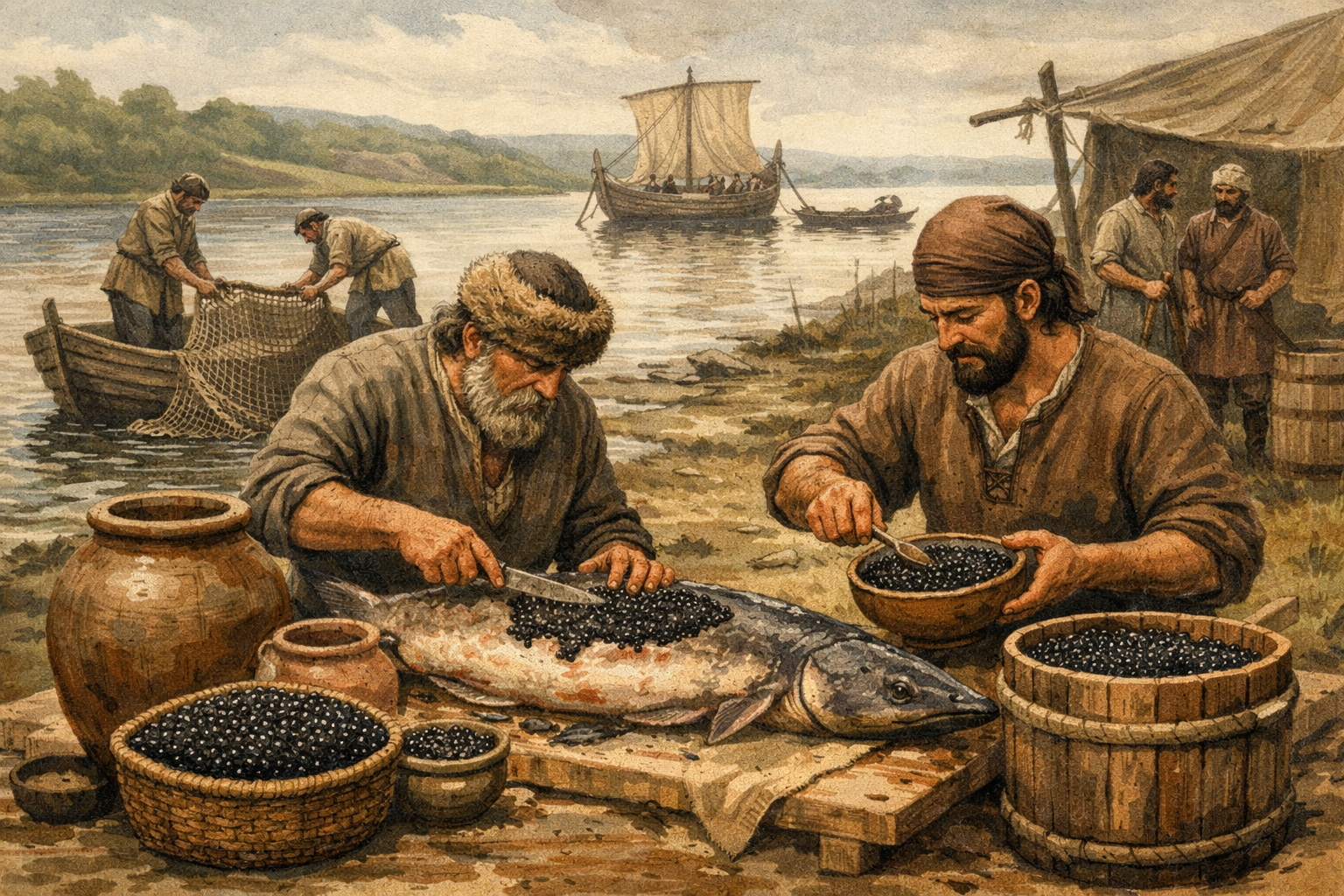
In the past, the method used to produce caviar consisted of collecting sturgeon roe and lightly salting it to preserve it, a completely artisanal technique.

It was mainly harvested in the Caspian Sea, where sturgeon were abundant, resulting in different types.

The process was manual and elaborate.

The roe was cleaned and salted, a process that helped both to extend the product's shelf life and to enhance its flavor.

This method, although rudimentary compared to modern techniques, guaranteed a quality caviar, which was consumed by the Russian nobility and some European courts.

HOW WAS CAVIAR PRODUCED IN THE PAST?

CAVIAR IN SPAIN

Caviar arrived in Spain in the 15th century, as a product of royalty.

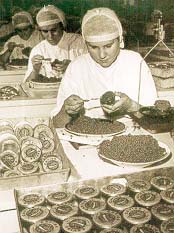
Its modern industrial production began in 1931 in Seville, with a pioneering factory. National production was consolidated in the 1960s with farming in Granada and Teruel, making Spain a major producer.

This project, in addition to being innovative at a national level, also positioned Seville as a benchmark in the sustainable cultivation of caviar in Europe.

Over the years, significant growth has been achieved, making Spain one of the main caviar producers on the continent.

Sevillian aquaculture, which respected the environment, has been fundamental to the evolution of the sector and has been of great help in consolidating Spanish caviar as a product of international quality.

CAVIAR IN SPAIN

Interesting Facts about Caviar

Sturgeon, from which caviar is obtained, were caught in seas and rivers, requiring manual and laborious methods.

For example, the Persians collected sturgeon eggs and used them as food, although their production process was nothing like it is today.

Caviar was not originally so coveted for its exclusivity, but rather for its nutritional benefits, as it was a rich source of omega-3 fatty acids and protein.

Even the tsars were great caviar enthusiasts when it became a symbol of status and power in the Russian Empire.

The tradition then spread over the centuries, becoming increasingly appreciated in other parts of the world.

Interesting Facts about Caviar

5€ off your first purchase!

From February 1st to November 15th