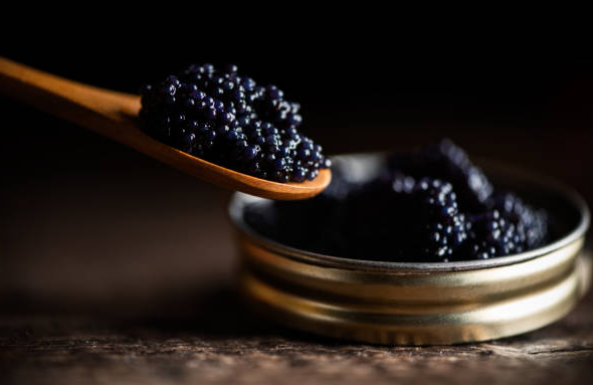
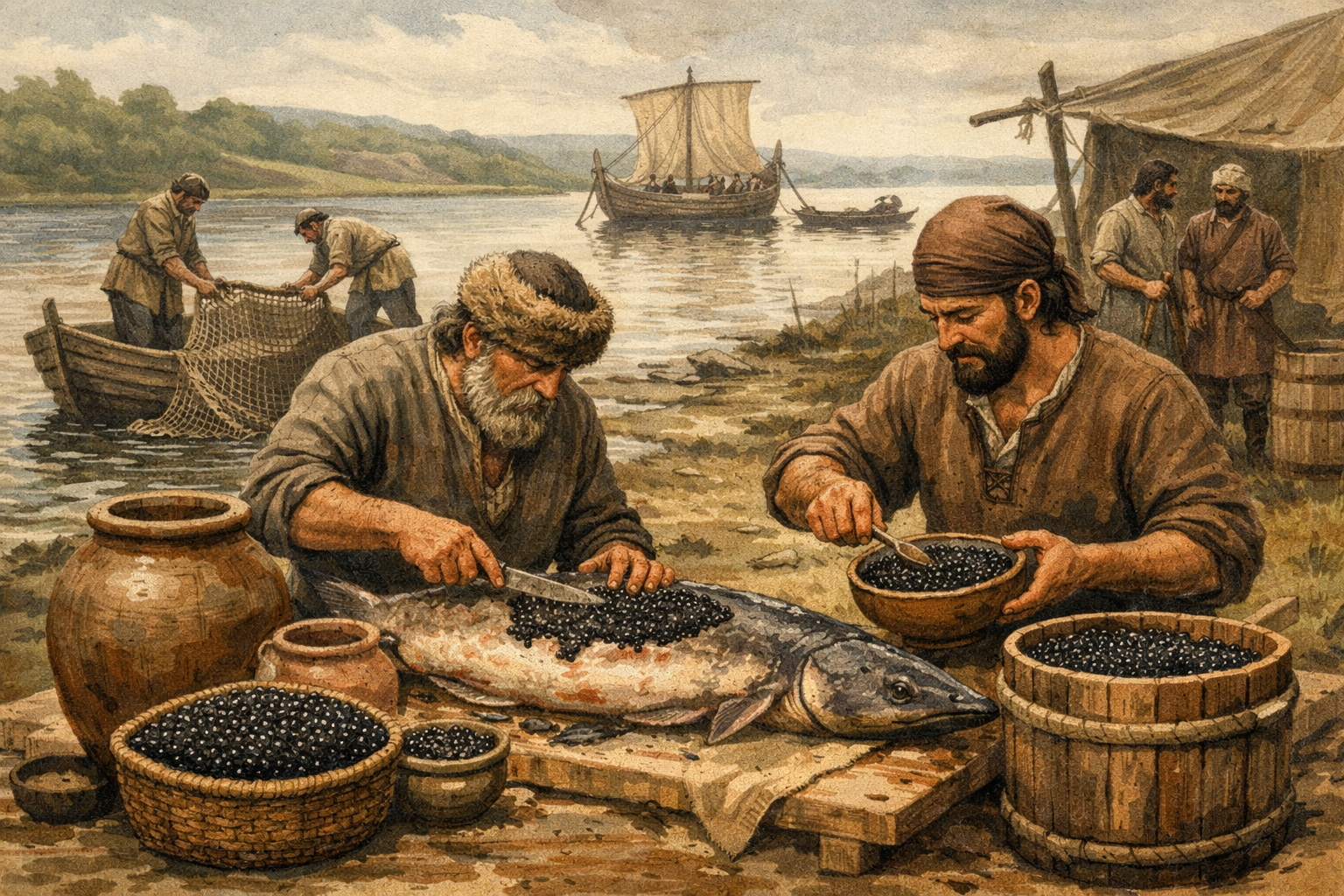
The Persian people were the first to consume caviar. Previously, they ate sturgeon meat, but not its roe. Caviar went from being a source of energy to a product considered a symbol of global gastronomic luxury.
The caviar industry emerged around the Mediterranean some time later.
During the Middle Ages, caviar was consumed in Russia, but it was something reserved for the upper classes. They consumed it as a meat substitute. Interestingly, the Russian Orthodox Church allowed the consumption of caviar during periods of fasting, which increased its popularity among the Russian population.
During the 19th century, Russia began exporting caviar to Europe. It quickly gained recognition throughout Europe for its superior quality and flavor.
In Europe, it became a delicacy for European aristocrats, particularly in France and England.
It became popular in gastronomy thanks to two brothers who presented Russian sturgeon caviar at the Grand Palais gastronomic exhibition in France in 1925.
Later, caviar was exported to the United States, where demand grew rapidly and it became a staple for celebrities and high society.
Unfortunately, the high demand for caviar led to overfishing.
Sturgeon populations declined, so regulations became stricter and a shift in sturgeon farming practices was implemented, primarily to protect the species.