Click

WHAT PRICE CAN WHITE TRUFFLES HAVE ON THE MARKET?

The white truffle is considered one of the most exclusive products in gastronomy.

The white truffle, emblematic of its origins in the Alba region of Piedmont, can also be found in Croatia. This truffle has a shorter, more limited season, concentrated in autumn, from October to December.

It is distinguished by its more penetrating and volatile aroma, often reminiscent of garlic, aged cheese, and even methane gas. It also has a smooth appearance, with tones ranging from beige to gold, and a light interior crossed by fine veins.

This truffle is the most exclusive and expensive of all the varieties, with prices ranging from €2,500 to €6,000 per kilo.

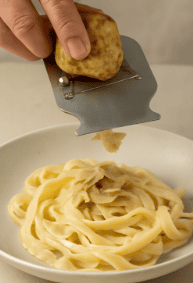
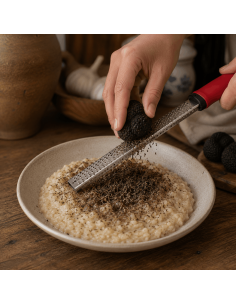
In cooking, heat is avoided at all costs with this product, as all its essence would be lost. It is always used raw, grated on pasta, risottos, eggs, or carpaccio, where it provides an incomparable aroma.

The white truffle (TUBER MAGNATUM)

Unlike other species, the white truffle grows wild and has not been cultivated in a controlled manner, which further increases its value. Its habitat is found in specific regions of Italy, primarily Piedmont, Tuscany, Emilia-Romagna, and Molise, although specimens can also be found in Croatia, Slovenia, Serbia, and some areas of northern Greece.

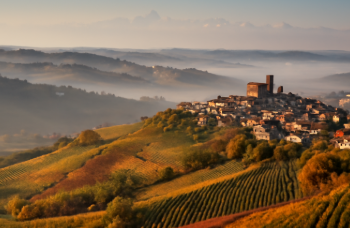
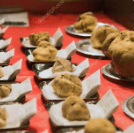
The town of Alba, in the Piedmont region, is the world epicenter of the white truffle: the famous Alba International White Truffle Fair is held there every autumn, where specimens are auctioned and can fetch extraordinary prices.

This product grows wild; in fact, it has not been cultivated in a controlled manner, which increases its value. Its habitat is mainly in areas of Piedmont, Tuscany, Emilia-Romagna, and Molise, although specimens can also be found in Serbia, Slovenia, and Croatia.

The town of Alba, Piedmont, is the world center of white truffles. It's where you'll find the famous Alba White Truffle International Fair, where specimens are auctioned off for unbelievable prices.

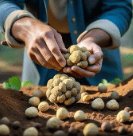
Harvesting takes place between October and December, although in some areas it can last until January. The entire process has been carried out for a long time; it's a centuries-old tradition achieved thanks to trained truffle dogs that detect the aroma underground. Pigs were once used, but this method of harvesting was abandoned because they often ate the truffle before the harvester could reach them.

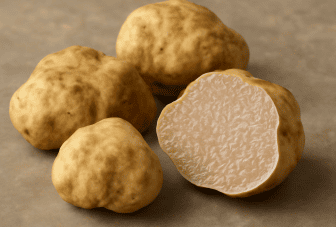
The white truffle has a more irregular shape and a smooth surface. Its color can range from beige to golden to light brown, all depending on the type of surface on which it grows. Its interior is distinguished by a marbled gleba with white veins. However, its most distinctive feature is its unmistakable aroma, extremely intense, very penetrating, and volatile. Chefs' fascination with this product is partly due to its aroma, which is also responsible for its value.

As for its flavor, it has notes that permeate any dish. Unlike black truffles, for example, white truffles are not cooked, as doing so would destroy their aromatic compounds. Therefore, they are used raw, grated, or sliced ​​at the end of cooking.

International White Truffle Market

The white truffle is known in the international market for its high price, as it is one of the most expensive products in the world. Each season, its price fluctuates, but it is usually around €2,500 to €6,000 per kilo, sometimes even exceeding €10,000 per kilo at auction. In fact, on one occasion in 2021, an 830-gram white truffle fetched over €100,000 at the Alba charity auction.

In recent years, it has become even more well-known in the international market due to its interest in haute cuisine and its export to markets such as the United States, Japan, and the United Arab Emirates. However, it should be noted that its production remains limited and entirely artisanal, which maintains the perfect balance between exclusivity and quality.

This delicate product is transported under refrigeration conditions to ensure it reaches its destination without losing its freshness or aroma. Therefore, they transport it maintaining the refrigeration chain between 2 and 4°C, which prevents spoilage and preserves its aroma.

Refrigerated boxes with cold gels or storage in portable coolers are especially used to maintain a constant temperature during the journey, both by road and by air.

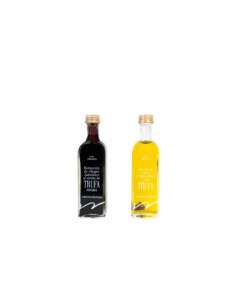
There are products made from white truffles, such as oils, sauces, salts, and truffle butters, that make their flavor accessible to the public. However, it's worth noting that these products are often made with synthetic flavorings, as their authentic aroma is almost impossible to preserve naturally.

What we can offer is some advice:

- Don't cook them. Add them at the end, grated or sliced.

- A small amount stands out more on clean plates.

- Store them in an airtight container in the refrigerator.

- Consume them within the first few days after purchase.

In short, if you use this product in moderation, its aroma and flavor make every bite an unforgettable experience.

History of the white truffle

The white truffle is native to the regions of Piedmont and Tuscany in Italy, although it can be found in other places such as Slovenia, Croatia, and Serbia. Its existence dates back to Ancient Rome, where this product was recognized as a gift from the gods.

During the Middle Ages, white truffles were mentioned in culinary texts, as they were associated with nobility and haute cuisine. They were also considered a remedy for illnesses, and various infections were treated with the product, so its use was not limited to gastronomy.

In the 15th century, the truffle became so significant that it was reflected in the social status of Italian courts, especially in areas where it was cultivated and harvested, such as Piedmont and Lombardy. Its status was also elevated thanks to its use at the Medici court in Florence, where it became a luxurious delicacy.

In the 19th and 20th centuries, the white truffle reached the level we see today. However, due to overexploitation and the difficulty of cultivating it, its availability was limited. Therefore, despite attempts to cultivate it, it remains impossible to grow on a large scale, which leaves us with its high price and rarity.

In the 21st century, it is experiencing its golden age in terms of prestige and demand. Its market has expanded significantly, and at auction it reaches an incredible value of up to 100,000 euros, depending on size and quality.

THE TRADITION OF THE WHITE TRUFFLE

Traditionally, truffles are harvested during the fall and winter with the help of truffle dogs, trained to detect their aroma underground. Harvesting isn't as easy and pleasant as it seems, as everything depends on the specific climatic and soil conditions, which makes the product so rare and coveted.

Throughout time, the white truffle has symbolized exclusivity, wealth, and prestige. Today, its appearance on a plate remains an exquisite way to demonstrate sophistication and refinement. This is all due to its quality, its aroma, its difficult access, and its scarce cultivation.

THE WHITE TRUFFLE..

The white truffle is a culinary treasure that reflects the connection between nature, tradition, and luxury. Its international market is expanding, driven by rising demand in regions with a strong culinary culture and high purchasing power. Its rarity and superior quality continue to consolidate it as a symbol of prestige in global haute cuisine.

5€ off your first purchase!

From February 1st to November 15th