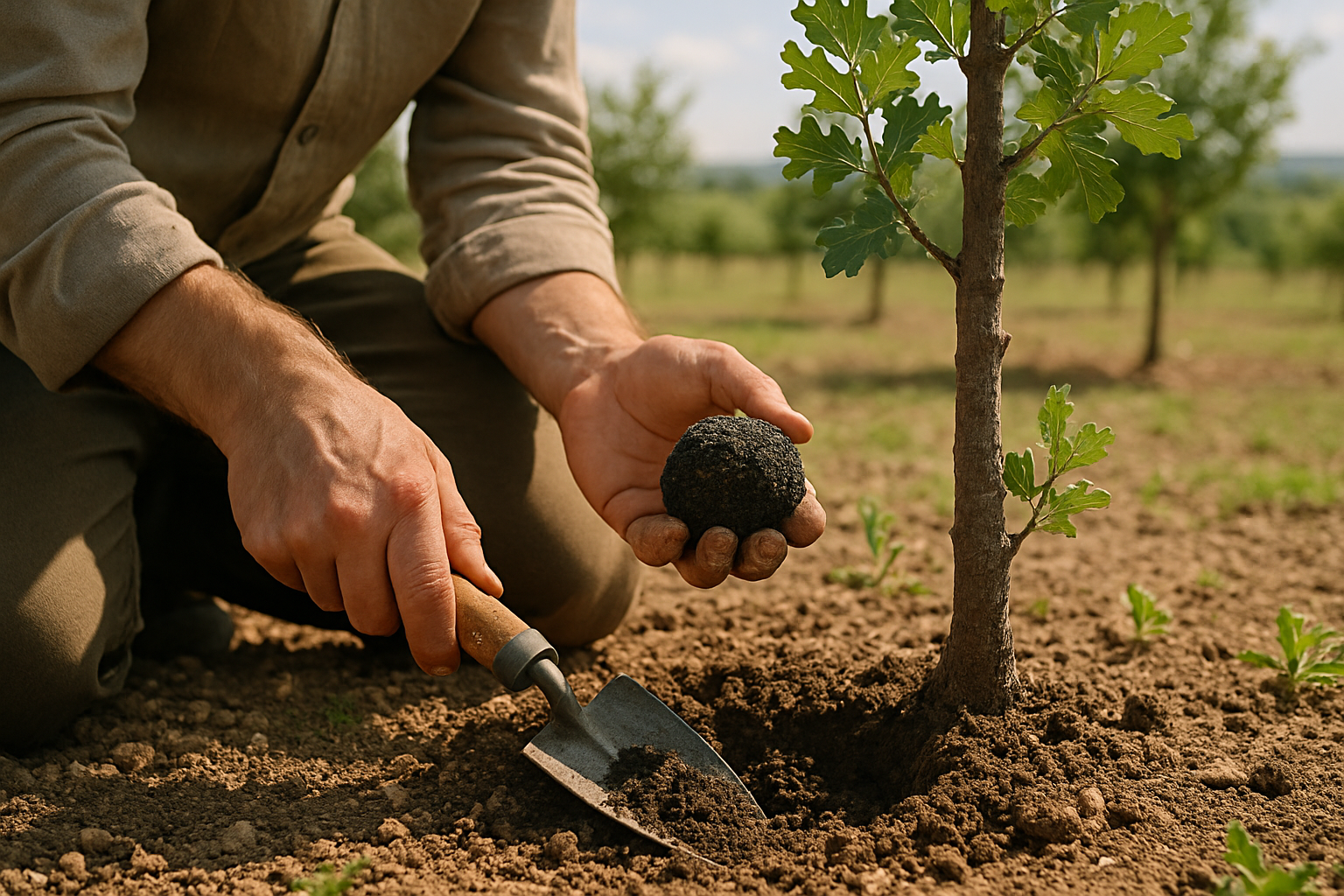
TRUFFLE CULTIVATION IN TERUEL

The black truffle, the black diamond. It needs to be pampered with cold winters, well-drained soils, and dry summers. Just what our province of Teruel offers.

Add to this an altitude of between 800 and 1,300 meters, and a terrain morphology that has historically complicated other types of crops, but which in turn is perfect for the development of mycorrhizae that go from the fungus to the corresponding trees (holm oaks, oaks, or kermes oaks).

It is no coincidence that in the province of Teruel there are more than 7,000 hectares dedicated to its cultivation, all of them spread across a hundred municipalities.

This commitment has helped Aragon rise to become one of the world's leading producers of truffle.

When talking about truffle cultivation in Teruel, it's impossible not to mention Sarrión. Located in Gúdar-Javalambre, it's best known as the black truffle capital. The surrounding area is said to be a major producer of Tuber Melanosporum, and practically all its residents are connected to the sector, either directly or indirectly.

Events related to this product, such as FITRUF, the International Truffle Fair, are held there every year, attracting professionals, chefs, and buyers from all over the world.

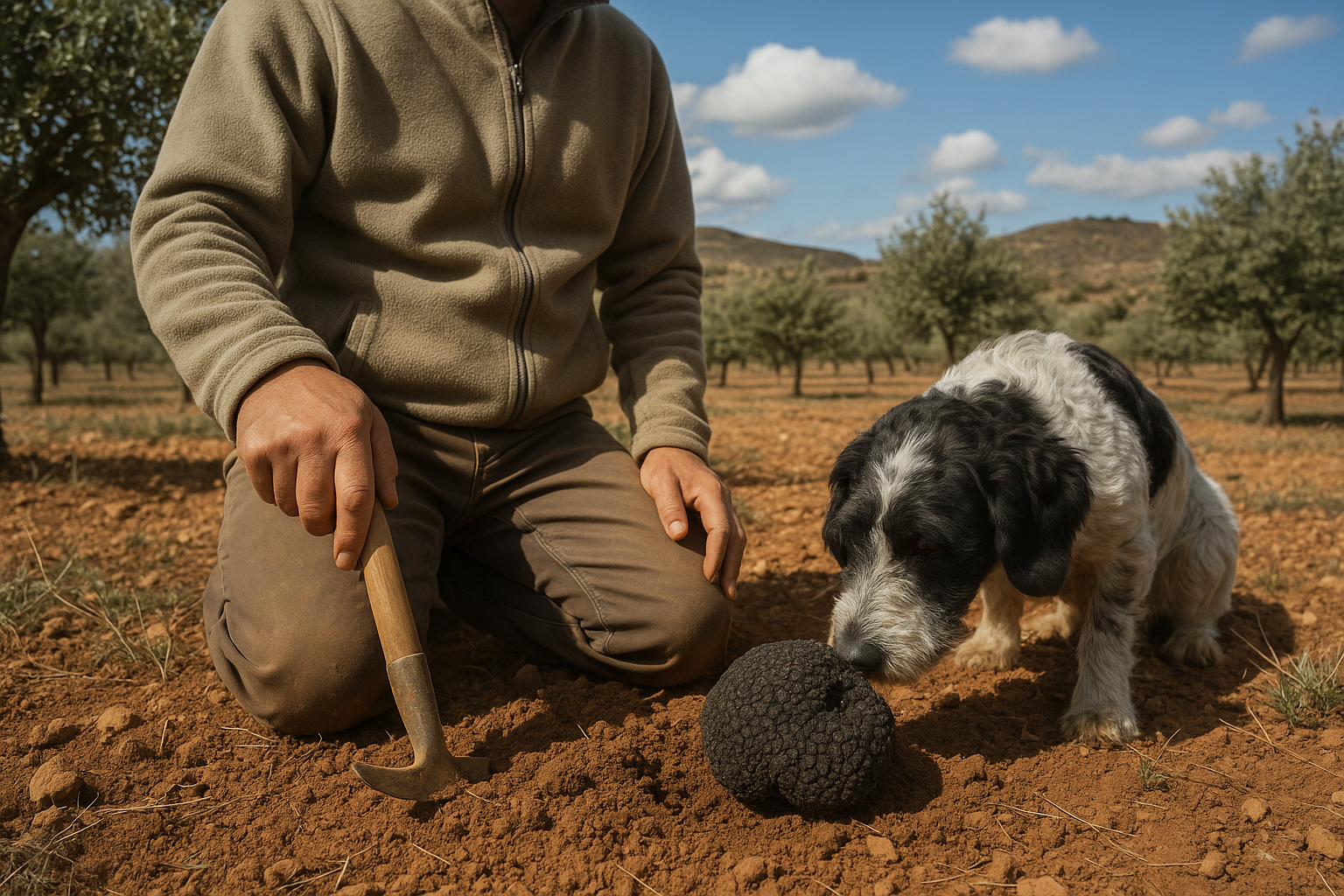
KEYS TO CULTIVATION?

Although each growing area is unique, truffle cultivation in Teruel generally follows some common guidelines:

- Land selection: It must have calcareous soils, with good drainage, stony texture, and a high pH.

- Soil management: Weed control, maintenance of a specific and limited vegetation competition, and surface tillage.

- Irrigation and water management: Many plantations opt for drip irrigation to ensure stable production, especially during dry summers.

- Pruning and tree management: It is necessary to balance production and vigor, aiding aeration and light penetration.

- Pest and wildlife control: Protection from animals such as wild boar and rabbits is essential.

- Patience: A plantation of this type begins production after 5-7 years, with peak production from around [date missing]. 10-12 years if there has been proper management.

ENGINE OF DEVELOPMENT AND OPPORTUNITIES

Truffle cultivation has been perfect for bringing about a revolution in the rural area of ​​Teruel. It has created new jobs, attracted a permanent population, and fostered the growth of new businesses in nurseries, technical consulting, processing, and marketing, as well as developing a thriving truffle tourism sector based on field trips, tastings, and incredible gastronomic experiences.

For anyone considering investing in a plantation, Teruel offers a very attractive combination: perfect natural conditions, extensive technical knowledge, an already established network of producers, and a strong regional brand associated with truffles.

The only drawback is that it is a medium- to long-term cultivation process that requires careful planning, cost-effective consulting, and professional management.

So, thanks to this wide range of opportunities, Teruel is more than just a business; It becomes a reinterpretation of the territory, valuing its intense climate and poor soils, and transforming them into an incredible "black gold" that is increasingly winning over the hearts of haute cuisine each year.


ENGINE OF DEVELOPMENT AND OPPORTUNITIES
DISEASES, PESTS AND INTRUSIVE TRUFFLES

DISEASES, PESTS AND INTRUSIVE TRUFFLES

To ensure this product is of such high quality, in addition to thoroughly studying the planting location and climate, for example, it's also essential to address minor issues like the appearance of small pests, as these can reduce melanosporum production.

To do this, you must be vigilant and control:

- Wild boars and rodents that dig up and eat the truffles.

- Fungi that can damage the roots and weaken the tree.

- Excluding species like Tuber brumale from the truffle's growing area.

- Adapting pruning, irrigation, and soil management practices to combat the truffles' subtle presence underground.

QUALITY, TASTING AND THE FIGHT AGAINST SCAMS

Something that's rarely discussed, but good to know for products as valuable and expensive as this one: How is the quality of a truffle defined? In Teruel, there's a tasting panel for this product that works based on its aroma, flavor, and texture—also known as organoleptic criteria—to go beyond a basic classification by size and shape.

We also have the "Truffle Negra D'Aragón" project, which, to increase transparency, is promoting a truffle observatory and its quality standards, and to combat fraud such as mislabeling or the use of synthetic flavorings.

And one of the most important things, which will soon be implemented, is the Protected Geographical Indication (PGI), establishing a series of requirements regarding its origin, species, and the characteristics of the product sold under this name.

UNIQUE TRUFFITURISM

You can enjoy different experiences such as "Experiencing Truffles," including informative talks about the different species, their conservation, and market fraud, as well as a trip to the countryside.

The Living Lab Teruel, next to the Truffle Experience Park, allows you to visit plantations, companies, and its Tuber Universum museum, creating a connection between the visitor and the entire value chain, not just truffle hunting.

You can also find specialized accommodations, such as those linked to the black truffle, which offer unique and comprehensive getaways focused on truffle culture.

This type of tourism is more technical and educational, helping to diversify income for farms and explain to people all the work that goes into getting a truffle to their plate.

AUTHENTIC TRUFFLE TOURISM

5€ off your first purchase!

From February 1st to November 15th