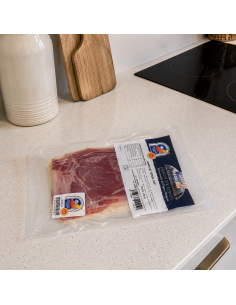
How to differentiate acorn-fed ham?

When we think of Spain, we inevitably think of the wide variety of ham available.

And although we sometimes lump all ham into a single category, the truth is that there are hundreds of different varieties.

Among them, we're going to discuss the differences between Iberian acorn-fed ham and Teruel ham with a Protected Designation of Origin (PDO).

Although both are recognized quality products, their differences in origin, breed, feeding, and curing make them worlds apart.

Do you know the differences between these two distinctive types of ham? Let's talk about them!

1. The Origin: Iberian vs. Serrano

The first major difference between the two types of ham is the breed of the pig.

We must keep in mind that when we talk about different varieties of ham, they are usually differentiated by their ancestry, that is, by their breed and that of their parents.

  • Jamón de Bellota Ibérico: comes from Ibérico pigs, a species native to the Iberian Peninsula. This breed is characterized by its ability to infiltrate fat into the muscle, resulting in a juicy ham with visible fat marbling and a very distinctive flavor.
  • Jamón DOP Teruel: is made from white breed pigs, specifically crosses of the Landrace, Large White, and Duroc breeds. The latter is mandatory in at least one of the parents, which gives greater quality and flavor to the final product. Jamón de Teruel is a Serrano ham, not an Iberian ham.
pig

2. Feeding and parenting

This is one of the aspects that most influences the flavor and final price of the ham.

  • Iberian acorn-fed ham: As its name suggests, these pigs are fed acorns and natural pastureland during their final stage of life (montanera). This type of diet, rich in oleic acid, along with the exercise the animals receive in freedom, directly influences the flavor, aroma, and texture of the ham.
  • DOP Teruel ham: These pigs are raised on farms in Teruel and their diet is controlled and based on natural feed, mainly grains. They do not feed on acorns or live freely.

Diet is a fundamental factor in the price variation of ham, with the higher price being the more select the diet.

3. Geographical area and climate

Geographic location also affects the final result, especially during the curing process.

We must remember that curing depends entirely on the region's climate.

  • Iberian acorn-fed ham: This is mainly produced in areas such as Guijuelo (Salamanca), Jabugo (Huelva), Los Pedroches (Córdoba), and Extremadura. Each has its own microclimates, but these are generally mild to temperate regions.
  • DOP Teruel ham: This is produced exclusively in the province of Teruel, at an altitude of over 800 meters, which guarantees a dry, cool climate, ideal for slow, natural curing. This characteristic is one of the most valued, as it allows the ham to mature evenly.

4. Healing time

Without a doubt, the factor that generates the most doubt and controversy is the curing time for ham. This will depend on the type of ham you want.

  • Iberian acorn-fed ham: the curing process can last between 24 and 48 months, depending on the weight and the producer. This long curing process helps develop the deep, complex flavors that characterize it.
  • DOP Teruel ham: has a minimum curing time of 14 months, although it can be cured longer. The DOP regulations stipulate that the ham must weigh at least 7 kg and have a controlled and certified curing process.

5. Flavor, texture and appearance

The final texture and flavor of the ham are the result of all the previous processes we've listed. It depends on personal tastes and preferences. No ham is "better" or "worse" than another; they are simply different.

  • Iberian acorn-fed ham: It has a deep red color, with infiltrated fat, a juicy texture, and a rich, deep, and persistent flavor, with sweet and nutty notes due to its acorn-fed diet. The aroma is intense and distinctive.
  • DOP Teruel ham: Its meat is lighter, pinkish, with more white fat on the outside than infiltrated, and its flavor is mild, balanced, and slightly salty, highly appreciated by those seeking a less intense ham. It has just the right amount of salt and a firm, yet tender texture, and is generally softer in the mouth.
ham

Each type of ham is unique

Both hams are gastronomic treasures that reflect the cultural and natural richness of their respective regions.

Iberian acorn-fed ham is a gourmet product, with an intense, complex flavor profile and a texture that is very difficult to replicate. It is ideal for special occasions or for the most discerning palates.

On the other hand, Teruel DOP ham represents the excellence of Serrano ham, with a mild flavor, controlled curing, and quality guaranteed by its designation of origin.

There is no one "better" than the other: they are simply different. The choice between one or the other will depend on your personal tastes, your budget, and the type of experience you are looking for.

And you, which one will you choose?

5€ off your first purchase!

From February 1st to November 15th