Know Your Local Laws
Before you go mushroom picking, make sure it's legal in your area.
In some areas, mushroom picking is regulated, and there may be restrictions on the species and quantities you can collect, or you may be required to obtain a license.
Learn to Identify Edible and Poisonous Mushrooms
One of the most common mistakes among beginners is confusing edible and poisonous mushrooms.
There are some toxic species that closely resemble edible ones, so it's crucial to thoroughly understand the differences.
For example, Amanita muscaria (the fairy mushroom) is one of the best-known, but it is highly poisonous.
Some aspects to consider when identifying a mushroom include:
- Cap color: Edible mushrooms tend to have softer colors, while poisonous mushrooms may have more intense or unusual hues.
- Girdles or spores: Observe the arrangement of the gills and the color of the spores, as this is a good indicator for classifying the mushroom.
- Smell: Some mushrooms have a distinctive smell that can help you identify them. However, not all mushrooms have an easily recognizable aroma, so this method is not always reliable.
NEVER pick mushrooms you're not sure you can identify
This is the most important piece of advice, and the one most often repeated by mycology experts: if you're not sure a mushroom is edible, don't pick it.
Although the desire to find something is tempting, the risks associated with picking unknown mushrooms can be deadly. If you have any doubts, it's best to leave them alone.
Responsible harvesting
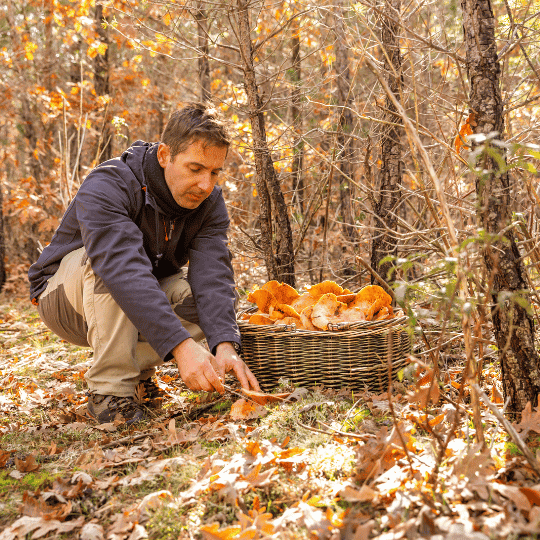
Mushroom harvesting should be done in a sustainable and environmentally friendly manner.
Never pick all the mushrooms in an area, as this will prevent the species from reproducing.
Take care of your personal safety
Mushroom picking often involves walking on trails or over difficult terrain. Wear comfortable clothing appropriate for the activity, such as sturdy boots and clothing that protects you from branches and insects.