LEARN ABOUT THE PARTS OF THE HAM

Ham is a food that accompanies us every day and is the essence of Spanish gastronomy. Therefore, in this publication we are going to detail all the parts that make up ham..

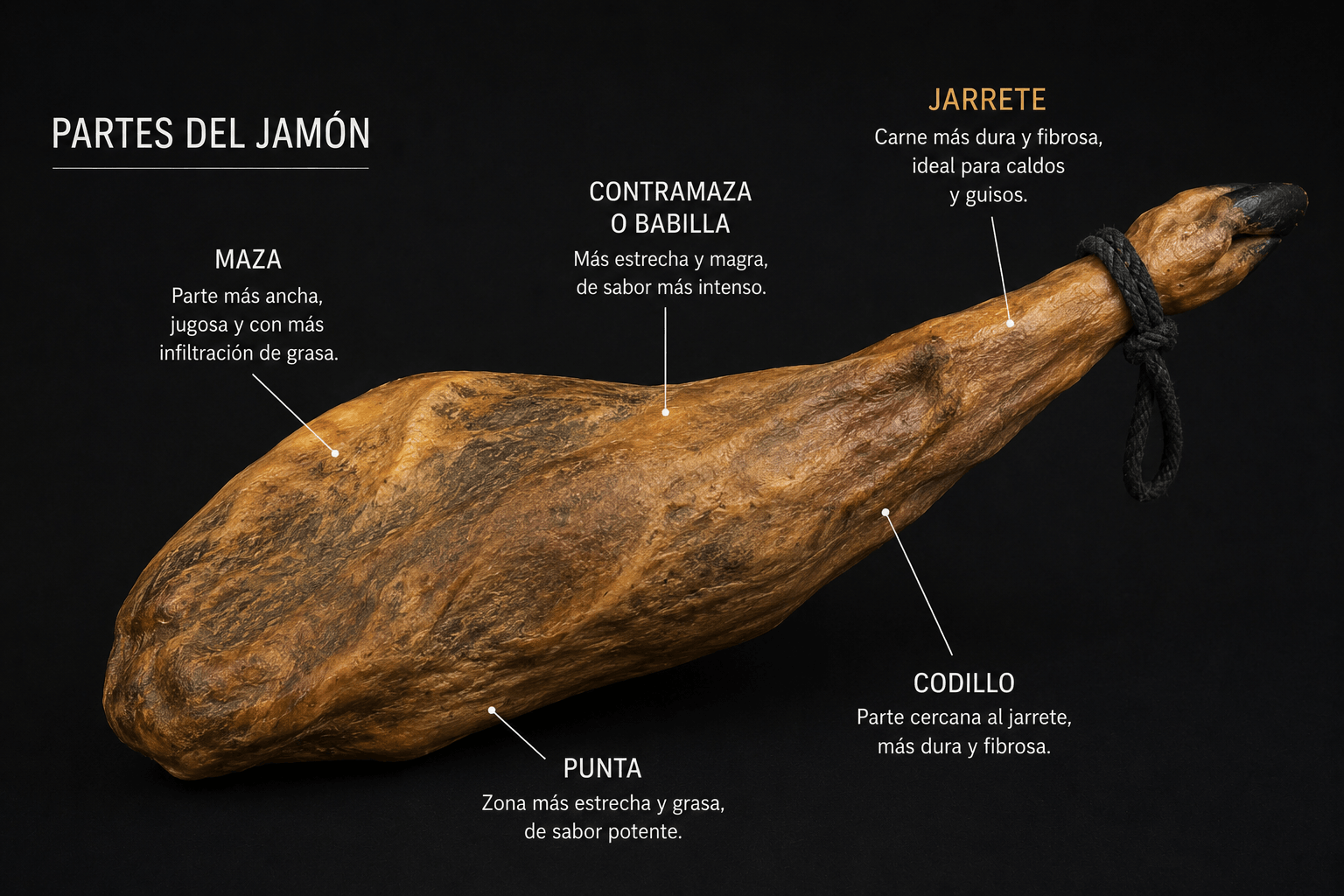
To begin going into detail, we will talk about what ham is. Ham is the hind leg of the pig. This part represents the ham, and the front part of the pig is the shoulder. The ham undergoes a more complex process, with a longer curing time and a much more extensive salting process, all because it contains a higher amount of fat. In this post, we will detail each of the parts that make up the ham: hoof, shank, knuckle, center, rump, knuckle, tip, fat, and bones.

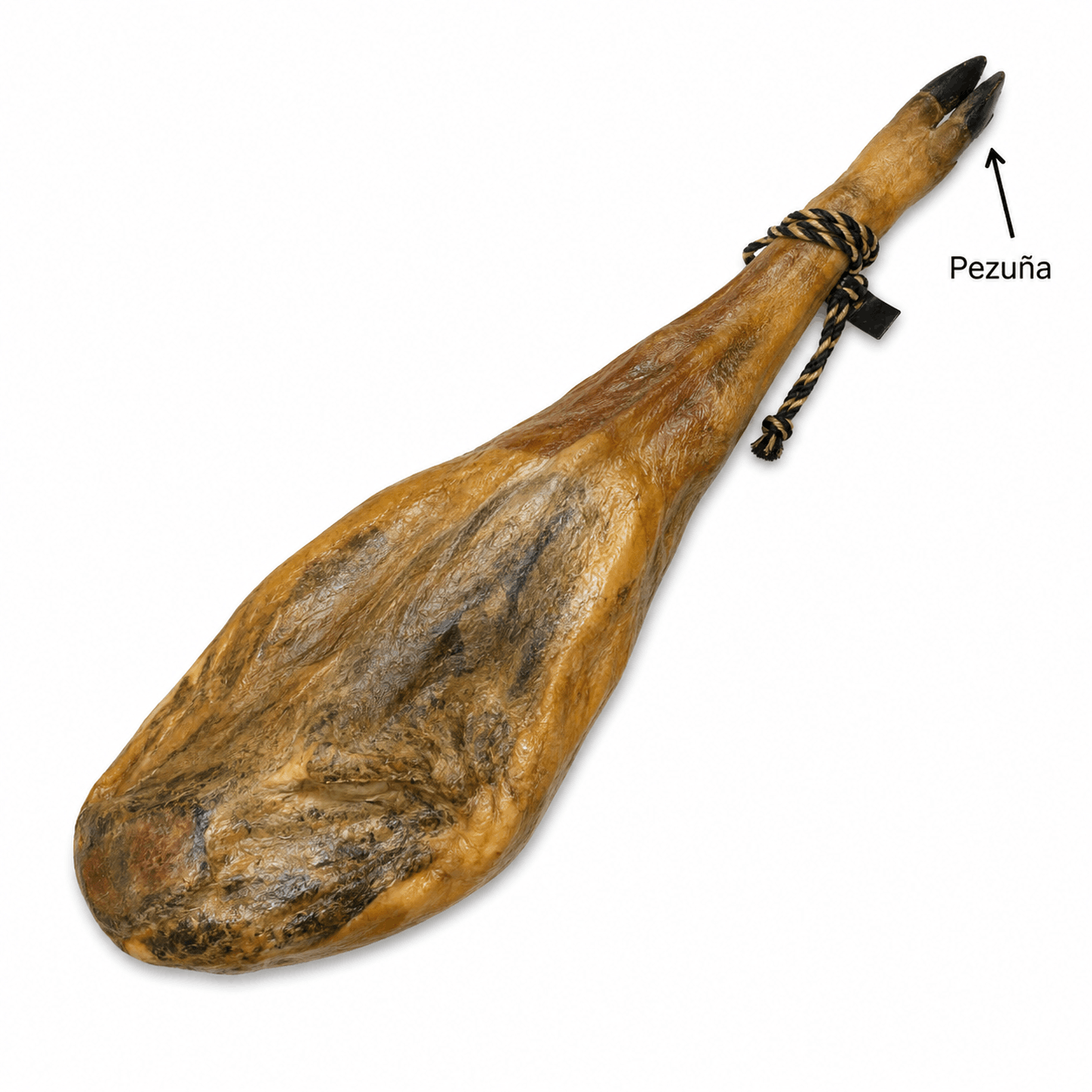
1. ham hoof

The hoof is the end of the leg; it's the reference point used to begin cutting.

It's important to emphasize that the hoof is not edible; it simply serves as a guide for cutting the ham. The position of the hoof—whether it's pointing up or down—indicates how to cut the ham.

The hoof also indicates whether it's an Iberian ham; the famous "pata negra" ham has a black hoof.

The color of the hoof is usually related to the breed of pig.

<p data-start="707" The colors of the hoof can vary from light brown to black.

1. ham hoof
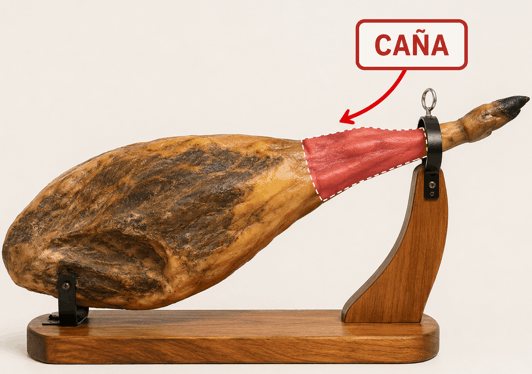
2. Ham shank

2. Ham shank

The shank is the part closest to the hoof; it's the narrowest part.

The meat is fibrous and very juicy, and is often used for stews.

Being closer to the bone, it's one of the juiciest cuts of meat.

It should be noted that because the area is so small and so close to the bone, cutting is very difficult, resulting in small slices.

The meat from this area is used to make croquettes, stews, broths, etc.

3. Ham shank

The shank is undoubtedly one of the tastiest parts of the ham. In some areas of Spain it is also called codillo.

Being close to the bone, it has a unique flavor.

The shank is located between the cannon bone and one of the meatiest areas.

Its meat is characterized by being tougher, more intense, and fibrous.

It should be noted that, like the cannon bone, cutting it is more difficult, resulting in very small slices that are tougher, but have a more intense flavor.

Like the cannon bone, this part of the ham is often used to make croquettes, broths, stews, and is frequently cut into Small cubes.

This area is possibly one of the least visible areas for slicing, but one of the most flavorful due to its proximity to the bone.

Many customers request this area as it is the most flavorful part of the ham.

3. Ham shank
4. Ham hoof

4. Ham hoof

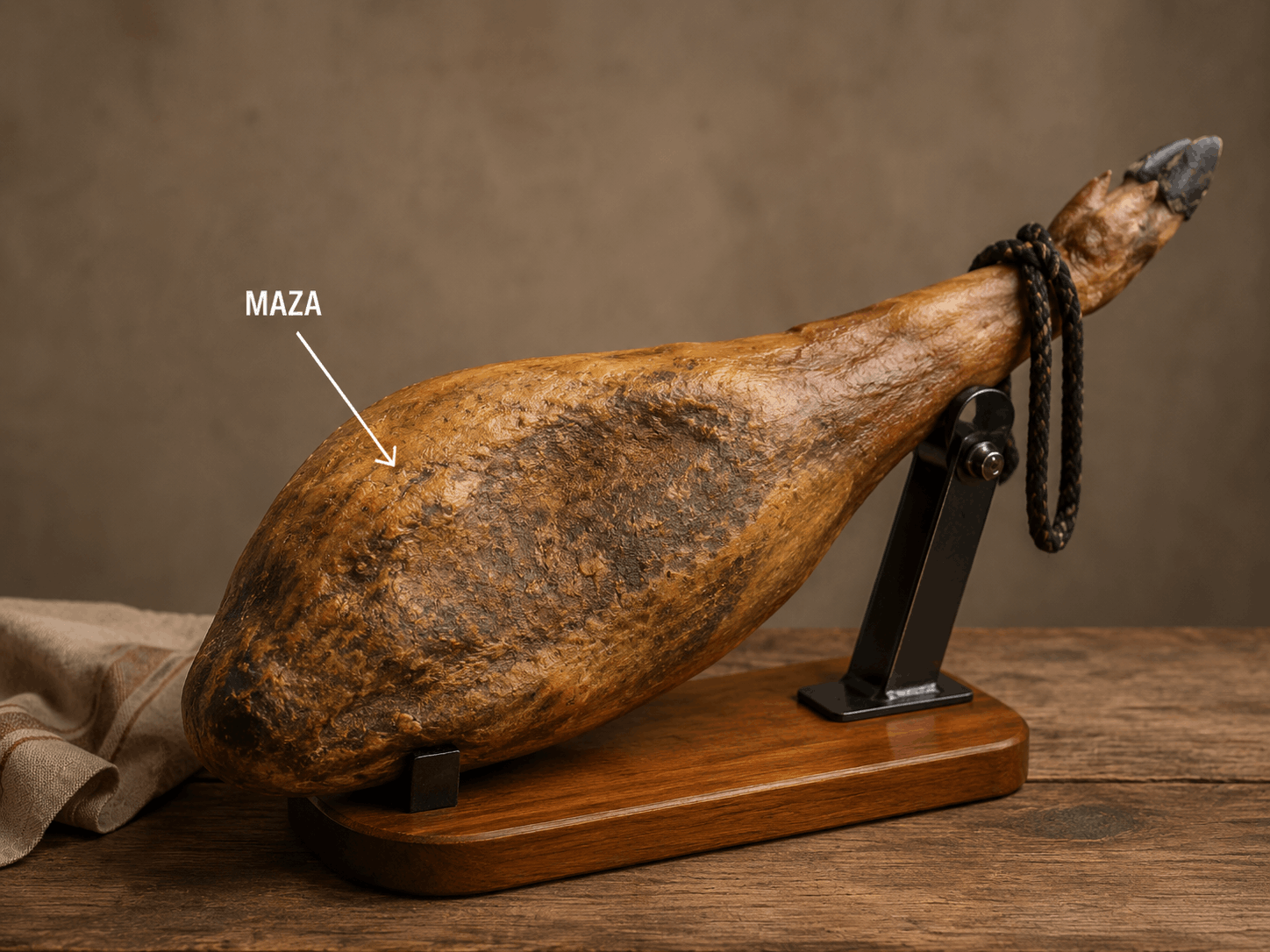
The maza of the ham is the largest part of the ham, located in the central part.

Besides being juicy, the maza is characterized by other very important aspects:

  • Greater infiltrated fat, or marbled fat. This gives the ham a different texture and such an exceptional flavor.
  • Juicy meat with less toughness or curing time.
  • The most visible part to the customer, where the best slices are obtained.
  • This area has a balanced flavor compared to other parts of the ham.

The color of the meat in this part of the ham usually varies greatly depending on whether it is a Serrano, grain-fed, or Iberian ham.

It has a pleasant texture and is usually the area chosen to display the ham at its best when sliced.

5 Ham shank

The contramaza, after the maza and in many cases second only to it, is the meatiest part of the ham.

The contramaza is located next to the ham.

It usually has firmer or tougher meat than the maza, less fat, and more flavor.

It's important to keep in mind that this is the part that dries out the fastest, so it must be cut correctly.

It's one of the most prized parts by professional ham carvers, due to the unique flavor it imparts to the ham.

It usually has a darker red color than the rest of the ham, with a different curing process than other parts of the ham.

It should be noted that many people choose this part of the ham despite it not having as visually appealing a appearance as the maza cut.

5 Ham shank
6. HAM TIP

6. HAM TIP

The maza of the ham is the largest part of the ham, located in the central part.

Besides being juicy, the maza is characterized by other very important aspects:

  • Greater infiltrated fat, or marbled fat. This gives the ham a different texture and such an exceptional flavor.
  • Juicy meat with less toughness or curing time.
  • The most visible part to the customer, where the best slices are obtained.
  • This area has a balanced flavor compared to other parts of the ham.

The color of the meat in this part of the ham usually varies greatly depending on whether it is a Serrano, grain-fed, or Iberian ham.

It has a pleasant texture and is usually the area chosen to display the ham at its best when sliced.

7. Ham shank

The contramaza, after the maza and in many cases second only to it, is the meatiest part of the ham.

The contramaza is located next to the ham.

It usually has firmer or tougher meat than the maza, less fat, and more flavor.

It's important to keep in mind that this is the part that dries out the fastest, so it must be cut correctly.

It's one of the most prized parts by professional ham carvers, due to the unique flavor it imparts to the ham.

It usually has a darker red color than the rest of the ham, with a different curing process than other parts of the ham.

It should be noted that many people choose this part of the ham despite it not having as visually appealing a appearance as the maza cut.

7. Ham shank

5€ off your first purchase!

From February 1st to November 15th